

Closed Cell Spray Foam Insulation in Rancho Santa Margarita, CA
Energy-Saving Closed Cell Spray Foam Insulation for Rancho Santa Margarita, CA Homes — Licensed & Insured
Get expert closed cell spray foam insulation in Rancho Santa Margarita, CA. Eco Friendly Insulation improves comfort & energy efficiency. Call (949) 485-2258 today.
Closed cell spray foam insulation is one of the highest-performing insulation solutions available for residential and commercial properties. Unlike traditional fiberglass batts or loose-fill products, closed cell spray foam expands on contact to form a rigid, dense barrier that simultaneously insulates, air-seals, and moisture-resists in a single application. For homeowners in Rancho Santa Margarita, CA, this matters enormously — the city’s unique blend of warm inland temperatures, seasonal Santa Ana wind events, and coastal humidity influence from nearby Laguna Beach create thermal challenges that standard insulation simply cannot address.
At Eco Friendly Insulation, we specialize in delivering closed cell spray foam solutions tailored to the specific construction profiles and climate demands of Rancho Santa Margarita. Whether you own a mid-1990s production home in Melinda Heights or a newer custom build near the RSM Lake, our team understands what your structure needs to perform year-round. Call us today at (949) 485-2258 to schedule your consultation.
Understanding Closed Cell Spray Foam Insulation
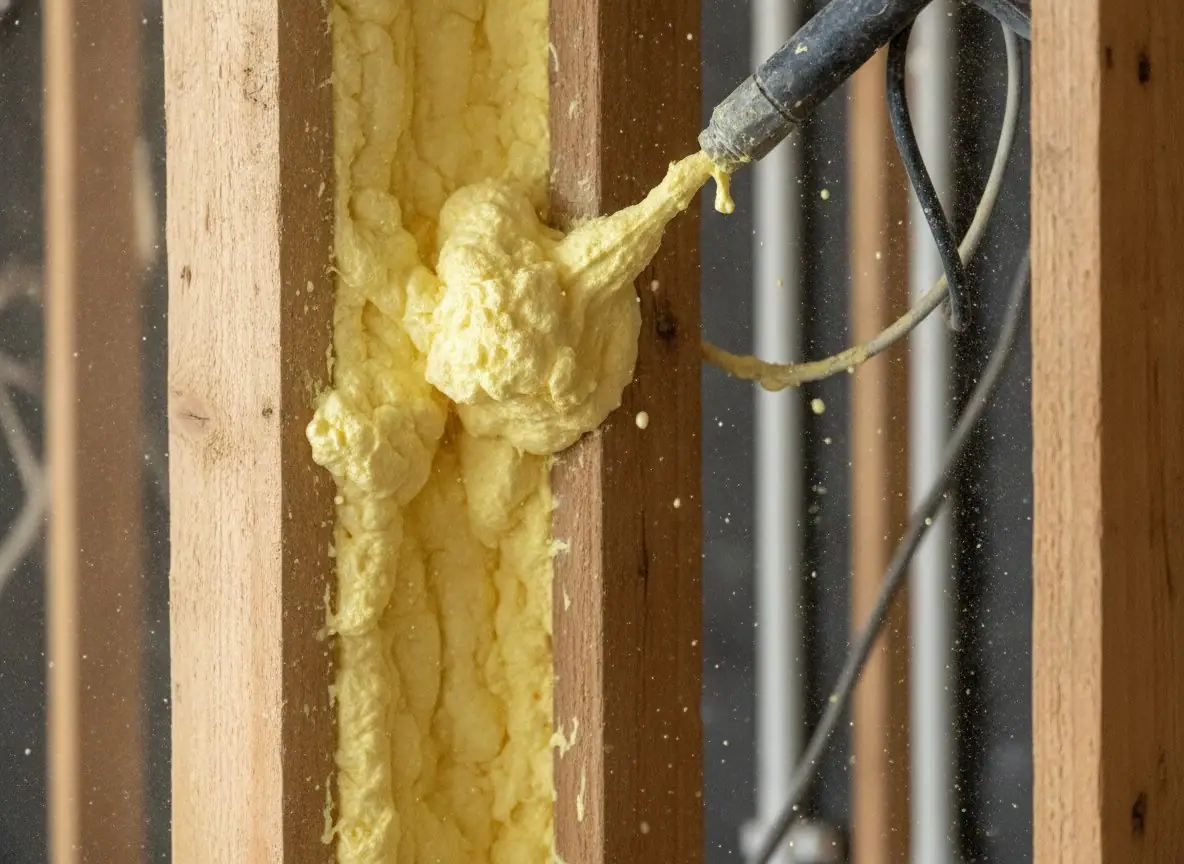
Closed cell spray foam insulation (ccSPF) is a two-component polyurethane product that, when mixed and sprayed, expands to approximately 30–60 times its liquid volume before curing into a hard, rigid foam. The term “closed cell” refers to the microscopic cellular structure of the cured material — the individual gas-filled cells are fully enclosed, meaning water vapor and liquid moisture cannot permeate through the foam matrix. This distinguishes it sharply from open cell spray foam, which has a softer, more sponge-like texture with interconnected cells that can absorb moisture.
The R-value of closed cell spray foam typically ranges between R-6.0 and R-7.0 per inch of thickness, making it the highest R-value-per-inch insulation product commercially available for residential construction. A standard 2-inch application delivers approximately R-13 to R-14 — comparable to a 3.5-inch fiberglass batt — while also providing structural reinforcement to wall cavities and roof decking.
Read moreShow less
Historically, spray polyurethane foam was developed in the 1940s and 1950s primarily for industrial and commercial refrigeration applications. Its adoption into residential construction accelerated through the 1980s and 1990s as building science research began quantifying the enormous energy losses attributable to air infiltration rather than purely conductive heat transfer. Modern closed cell formulations use hydrofluoroolefin (HFO) blowing agents with dramatically reduced global warming potential compared to earlier generations.
In Rancho Santa Margarita — a master-planned community incorporated in 2000 but developed heavily from the late 1980s through the early 2000s — the dominant building stock consists of wood-frame tract homes built during a period when California’s Title 24 energy codes were still evolving. Many homes were insulated to the minimum code requirement of the time, leaving significant performance gaps that today’s closed cell spray foam is ideally suited to address. Vaulted ceilings, open-plan attic configurations, and attached garages common in RSM’s Trabuco Canyon Road corridor neighborhoods are particularly well-served by ccSPF applications.
Beyond residential use, closed cell spray foam is increasingly specified for the commercial tilt-up and light industrial buildings found along the Rancho Santa Margarita business corridors near Antonio Parkway, where large roof spans and minimal insulation details in original construction create substantial cooling loads.
Why Closed Cell Spray Foam Insulation Is Needed in Rancho Santa Margarita
Santa Ana Wind Events and Air Infiltration
Rancho Santa Margarita experiences some of Orange County’s most intense Santa Ana wind events, with gusts regularly exceeding 50–70 mph during peak autumn and winter episodes. The October 2007 Santiago Fire, which swept through the Trabuco Canyon and Foothill Ranch areas immediately adjacent to RSM’s northeastern boundaries, stands as the most dramatic illustration of the wind-driven fire risk the region faces. During these events, warm, dry, high-pressure air from the inland desert races through the Saddleback Valley passes at speeds that force air infiltration through even minor gaps in building envelopes. Homes with conventional fiberglass insulation — which does not air-seal — can experience indoor humidity dropping to 10–15% relative humidity and temperatures rising 10–15°F above HVAC setpoints purely from infiltration. Closed cell spray foam’s monolithic air barrier properties directly counteract this mechanism, reducing air infiltration rates by up to 90% compared to unfilled stud cavities.
Thermal Bridging in Late 1980s–2000s Construction
The production homes built throughout RSM’s master-planned neighborhoods — including Melinda Heights, Tijeras Creek, Robinson Ranch, and the areas immediately surrounding the RSM Town Center — were constructed predominantly with 2×4 wood framing at 16-inch on-center spacing. Wood framing has an R-value of approximately R-1.25 per inch, meaning that every stud in a wall insulated with R-13 fiberglass batts creates a thermal bridge that locally reduces effective wall R-value to approximately R-4.5. When closed cell spray foam is applied at even 1–2 inches before filling the remainder of the cavity, the continuous foam layer across stud faces breaks the thermal bridge and can increase whole-wall effective R-value by 30–40%.
Moisture Intrusion from Hillside Grading and Crawl Space Conditions
Significant portions of Rancho Santa Margarita’s residential inventory are built on hillside-graded pads where soil moisture migration presents ongoing challenges. The expansive clay soils prevalent in the Trabuco Hills and Las Flores Mesa areas can retain subsurface moisture even during extended dry periods. When this moisture encounters unconditioned crawl spaces beneath pier-and-beam or raised foundation homes, it creates vapor pressure that drives moisture up into floor assemblies. Closed cell spray foam applied to crawl space ceilings and rim joists creates a Class II vapor retarder that, combined with crawl space encapsulation, effectively separates the living environment from ground-sourced moisture.
Cooling Load Intensity During Inland Heat Events
RSM regularly records summer temperatures 10–18°F higher than the coast, with inland heat events pushing inland Orange County temperatures to 100–108°F while Laguna Beach remains in the mid-70s. Attic temperatures in RSM homes during these events can reach 145–160°F, creating radiant heat loads on ceiling assemblies that overwhelm the capacity of standard R-38 blown-in insulation. Closed cell spray foam applied as an unvented attic application directly to the underside of roof decking converts the attic to a conditioned space, eliminating the radiant heat source entirely and reducing cooling loads by an estimated 20–35%.
Free, no-obligation estimates
Talk to Eco Friendly Insulation
Tell us what you need and we’ll take it from there.
Signs You Need Closed Cell Spray Foam Insulation in Rancho Santa Margarita
Energy Performance Indicators
- Monthly SCE or SoCalGas bills that spike significantly during June–September or during Santa Ana wind events in October–December
- HVAC system cycling more frequently than every 15–20 minutes during peak summer afternoons
- Rooms on the upper floor or those adjacent to the garage consistently 5°F or more warmer than thermostat setpoints
Physical and Structural Symptoms
- Visible gaps, voids, or compressed fiberglass batts when inspecting attic spaces above ceiling drywall
- Frost or condensation patterns on interior wall surfaces during the December–February cool season, particularly on north-facing walls in hillside homes
- Musty odors originating from crawl space areas, especially in homes on Coto de Caza Drive or hillside lots in Robinson Ranch
- Visible daylight or strong air movement at electrical outlet boxes on exterior walls during Santa Ana conditions
Comfort and Indoor Air Quality Issues
- Persistent dust accumulation near supply registers, indicating excessive outside air infiltration through the building envelope
- Allergy or respiratory symptoms that worsen during high Santa Ana wind events despite closed windows
- Uncomfortable drafts in living areas even when all doors and windows are fully closed
Urgency Indicator: If your home was built between 1988 and 2002 and has never had insulation upgraded, the probability is high that current envelope performance falls below current California Title 24 standards. Contact Eco Friendly Insulation at (949) 485-2258 for an immediate assessment.
Our process
Our Closed Cell Spray Foam Insulation Process in Rancho Santa Margarita
- 01
Initial Assessment and Thermal Audit (Day 1 — 1–2 Hours)
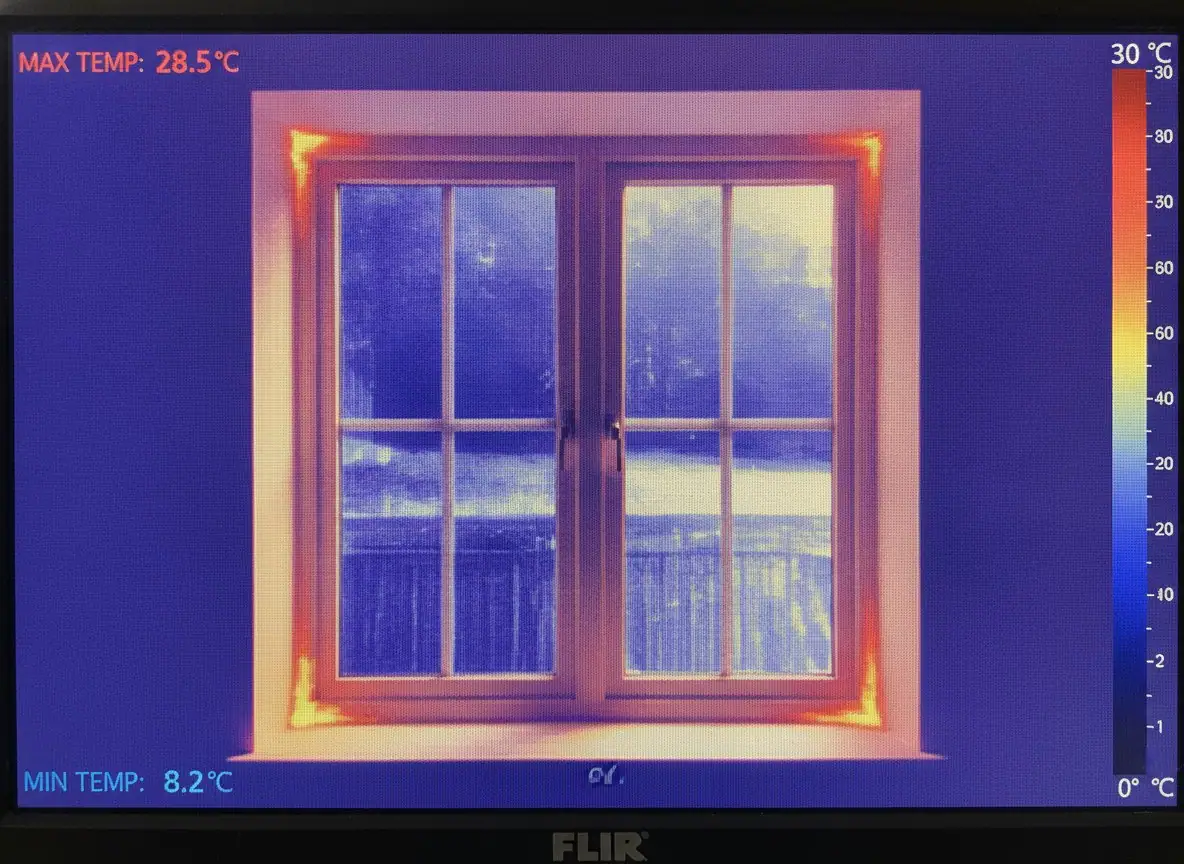
Our technician visits your Rancho Santa Margarita property to conduct a visual inspection combined with thermal imaging where applicable. We assess current insulation condition, identify air leakage pathways at rim joists, attic bypasses, and wall penetrations
- 02
Scope Development and Proposal (Days 2–3)
Based on the audit findings, we develop a project scope specifying application zones, target thicknesses, and expected R-value outcomes. We note any RSM-specific conditions such as unvented attic conversions requiring municipal building permit coordination wit
- 03
Site Preparation (Day of Installation — 1–2 Hours)
Preparation involves masking all surfaces adjacent to application areas, including HVAC equipment, light fixtures, and roof ventilation components. For interior applications, residents and pets must vacate the property for a minimum of 24 hours after applicati
- 04
Equipment Setup and Climate Conditioning (Day of Installation — 30–60 Minutes)
Closed cell spray foam requires substrate temperatures between 50°F and 100°F for proper adhesion and cell formation. During RSM’s winter months (December–February), when attic temperatures can drop below 55°F overnight, our equipment includes pre-heated hose
- 05
Spray Application (Day of Installation — 2–6 Hours Depending on Scope)
Our certified technicians apply closed cell foam in passes not exceeding 2 inches per lift to prevent exothermic over-heating. Multiple lifts are applied sequentially to reach target thickness. For RSM’s typical attic unvented conversion, we target a minimum o
- 06
Inspection and Quality Verification (Day of Installation)
Cured foam is inspected visually and by physical probe for voids, delamination, or under-application. Thickness is verified at multiple points using calibrated depth probes.
- 07
Cleanup and Re-Occupancy Clearance (24–48 Hours Post-Application)
Masking materials are removed, the space is ventilated, and we confirm the property is ready for re-occupancy. All project documentation, including material safety data sheets and installed R-value records, is provided for HOA and permit compliance if required
Closed Cell Spray Foam Methods and Approaches
Unvented Attic (Hot Roof) Application
The most common application in Rancho Santa Margarita’s late-1990s tract homes, this method involves spraying ccSPF directly to the underside of the roof deck and all gable end walls, eliminating the need for passive ventilation. This approach is ideal for homes with complex rooflines, dormers, or HVAC equipment located in the attic — all common features in RSM’s Melinda Heights and Tijeras Creek neighborhoods. Minimum effective thickness of 5.5 inches achieves Climate Zone 8 compliance.
Wall Cavity Flash-and-Batt Application
For renovation projects or additions where walls are opened, a 1–2 inch flash coat of closed cell foam is applied to the exterior sheathing face before the remaining cavity is filled with blow-in insulation or fiberglass. The foam coat creates the air barrier and vapor retarder while optimizing material cost. Particularly effective for exterior walls facing Rancho Santa Margarita’s prevailing southwest winds.
Crawl Space Rim Joist and Floor System Application
For RSM homes with raised foundations — more common in the older hillside lots backing to the Trabuco Hills — ccSPF is applied at 2–3 inches to rim joists and band joists where air infiltration is most concentrated. This is frequently combined with crawl space insulation services for comprehensive below-floor performance.
Garage Ceiling and Common Wall Application
Attached garages in RSM’s typical tract homes share one or two walls and a ceiling with conditioned living space. Applying closed cell foam to the shared assembly prevents both thermal transfer and volatile organic compound (VOC) migration from stored vehicles and chemicals into living areas — a building science concern increasingly cited by California air quality researchers.
Commercial Roof Deck Application
For the light commercial and mixed-use buildings along Antonio Parkway and Melinda Road, ccSPF applied to interior metal roof deck panels provides both thermal performance and condensation control that standard rigid board insulation cannot match at equivalent thickness.
Closed Cell Spray Foam Insulation Cost in Rancho Santa Margarita
Understanding closed cell spray foam insulation cost in Rancho Santa Margarita requires evaluating several interconnected factors specific to Orange County’s labor market and the local building stock.
Typical Price Ranges
- Material and labor (installed): $1.50–$3.50 per board foot (one square foot at one inch thick), with closed cell typically priced at the higher end of the foam spectrum
- Attic unvented conversion (1,500–2,000 sq ft attic): $4,500–$9,500 depending on roof pitch complexity and existing obstructions
- Crawl space rim joist application: $800–$2,200 for a standard RSM raised-foundation home
- Flash-and-batt wall application (per 100 sq ft): $250–$450 installed
- Garage ceiling and shared wall: $1,200–$3,000 for a typical 2-car attached garage
Read moreShow less
Location-Specific Cost Factors in RSM
Rancho Santa Margarita’s HOA-governed communities (which include the majority of RSM’s residential neighborhoods) sometimes require pre-approval for exterior-facing work, which can add minor scheduling lead time. Permit fees from the City of Rancho Santa Margarita Building Division for unvented attic conversions typically add $150–$450 to project costs but are required for code compliance and future resale disclosure.
Orange County labor rates are approximately 15–25% higher than California’s inland regions, reflecting in installed pricing. However, SCE rebate programs for qualifying insulation upgrades and California’s TECH Clean California incentives can offset $500–$1,500 of project cost for eligible RSM homeowners.
For an accurate Closed Cell Spray Foam Insulation cost in Rancho Santa Margarita specific to your property, call Eco Friendly Insulation at (949) 485-2258.
Rancho Santa Margarita Neighborhoods We Serve
Melinda Heights
Developed primarily between 1990 and 1998, Melinda Heights features predominantly 2-story, 4–6 bedroom production homes with vaulted entry ceilings and large attic volumes. Many homes here have original fiberglass batt insulation that has settled or shifted over 25+ years. Unvented attic conversions and wall flash-and-batt projects are the most requested services in this neighborhood.
Tijeras Creek and Robinson Ranch
These hillside communities feature homes built between 1991 and 2003 on graded pads with significant lot-to-lot elevation variation. Crawl space moisture management and rim joist ccSPF applications are especially important here given the clay soil profiles and seasonal moisture migration from upslope grading.
RSM Town Center Vicinity and Las Flores
The mixed residential and light commercial properties near the RSM Town Center, along with the adjacent Las Flores community, include a mix of attached townhomes, condominiums, and detached homes built between 1999 and 2008. Party wall insulation and garage ceiling applications are common requests. We also serve the broader Ladera Ranch community nearby.
Coto de Caza Adjacent and Foothill Ranch
Larger custom and semi-custom homes in these areas feature complex rooflines and higher square footages requiring larger-scale attic ccSPF projects. We coordinate these with our service areas in Coto de Caza and Foothill Ranch.
Maintenance Tips for Closed Cell Spray Foam Insulation in Rancho Santa Margarita
- Annual Visual Inspection: Each spring after RSM’s rain season (typically March–April), visually inspect accessible ccSPF surfaces in attics and crawl spaces for any signs of mechanical damage, pest intrusion, or unusual discoloration.
- Protect from UV Exposure: Closed cell spray foam degrades under prolonged UV exposure. Any ccSPF applied in semi-exposed areas such as open eave soffits should be coated with an approved elastomeric paint or thermal barrier within 30 days of application and inspected annually.
- Monitor HVAC Penetrations: Where HVAC boots, exhaust flues, or plumbing lines pass through ccSPF-insulated assemblies, inspect the penetration seal annually. RSM’s seismic activity can occasionally displace pipes slightly, creating small gaps over time.
- Rodent Exclusion: While closed cell foam is not a food source for rodents, pack rats and roof rats active in RSM’s foothill interface zones will chew through foam to create nesting voids. Install rodent exclusion mesh at all attic vent openings to prevent mechanical damage to ccSPF installations.
- Post-Earthquake Check: Following any seismic event of Magnitude 3.5 or greater centered near the Elsinore Fault zone (which runs northeast of RSM), conduct a visual inspection of ccSPF at structural connections and rim joists.
- Avoid Overloading Attic Storage: In homes converted to unvented attic insulation, avoid placing heavy storage directly against ccSPF surfaces on roof deck. Use proper storage platforms to distribute loads and protect the foam surface.
- Schedule Professional Re-inspection Every 5 Years: While ccSPF is exceptionally durable, a professional assessment every five years ensures ongoing performance and compliance with any Title 24 updates.
Why Choose Eco Friendly Insulation for Closed Cell Spray Foam in Rancho Santa Margarita
Eco Friendly Insulation is a locally focused insulation contractor serving Rancho Santa Margarita and the greater South Orange County region. Our technicians are trained specifically in the building characteristics and climate conditions unique to the RSM area, including the Saddleback Valley’s thermal dynamics, the HOA compliance requirements common throughout RSM’s master-planned communities, and the construction details of the dominant 1990s–2000s production home stock.
We offer the full spectrum of insulation services under one roof — from spray foam insulation and attic insulation to insulation removal and insulation replacement — meaning your project doesn’t require multiple contractors or handoff coordination. Every project is approached with transparent, itemized proposals so RSM homeowners understand exactly what they’re investing in and why.
We serve communities throughout South Orange County including Mission Viejo, Aliso Viejo, Laguna Niguel, and San Juan Capistrano. Call us at (949) 485-2258 to speak with a local insulation specialist today.
FAQ
Frequently Asked Questions: Closed Cell Spray Foam Insulation in Rancho Santa Margarita
How much does closed cell spray foam insulation cost in Rancho Santa Margarita?
Installed pricing in RSM typically ranges from $1.50 to $3.50 per board foot depending on scope and accessibility. A full attic unvented conversion for a 1,600–2,000 square foot RSM home commonly falls between $5,000 and $8,500. Orange County labor rates and any City of Rancho Santa Margarita permit fees are factored into our proposals. Call (949) 485-2258 for a property-specific estimate.
Is a permit required for closed cell spray foam in Rancho Santa Margarita?
For unvented attic conversions, the City of Rancho Santa Margarita Building Division typically requires a building permit to verify Title 24 compliance. For crawl space, wall, and garage applications that do not alter the attic ventilation classification, permits are generally not required. We manage permit coordination on behalf of our clients.
How long does a closed cell spray foam installation take in an RSM home?
Most residential projects are completed in a single day. A standard RSM attic conversion (1,500–2,000 sq ft) takes 4–7 hours of spray time plus preparation. Re-occupancy is cleared 24 hours after application completion.
Will closed cell spray foam help with Santa Ana wind infiltration?
Yes — this is one of the most significant benefits for RSM homeowners. Closed cell spray foam creates a monolithic air barrier that reduces air infiltration by up to 90% compared to fiberglass insulation alone. During October–December Santa Ana events when gusts reach 50–70 mph in the Saddleback Valley, this air-sealing performance is directly measurable in indoor comfort and HVAC runtime.
Can closed cell spray foam be applied over existing insulation in my RSM attic?
For unvented attic conversions where foam is applied to the roof deck, existing attic floor insulation is typically left in place, providing an additive R-value benefit. If existing attic floor insulation is damaged, contaminated, or pest-infested, we recommend insulation removal prior to the ccSPF application. We assess the existing condition during our initial audit.
Is closed cell spray foam safe for my family?
Once fully cured (24 hours post-application), closed cell spray foam is chemically inert and poses no health risk. During application, the uncured chemicals require professional protective equipment and property evacuation. Our technicians follow all California OSHA and EPA requirements for spray polyurethane foam application, and we use modern HFO-blown formulations with significantly reduced environmental impact.
Does closed cell spray foam work in RSM’s attached garages to prevent fire spread?
Closed cell spray foam applied to garage ceilings and shared walls does improve the thermal and air barrier performance of these assemblies. However, it must be covered with an approved thermal barrier (typically ½-inch drywall) in any occupied-adjacent application per California Building Code Section 2603. We ensure all installations meet current CBC requirements.
Does Eco Friendly Insulation serve areas near Rancho Santa Margarita?
Yes. In addition to RSM, we serve Trabuco Canyon, Ladera Ranch, Lake Forest, San Clemente, Dana Point, Laguna Beach, Irvine, Tustin, and all surrounding South Orange County communities.
Get Your Closed Cell Spray Foam Insulation Estimate in Rancho Santa Margarita Today
If your Rancho Santa Margarita home is struggling with high energy bills, uneven room temperatures, or infiltration during Santa Ana wind events, closed cell spray foam insulation may be the single highest-impact upgrade you can make to your property’s performance and comfort. Eco Friendly Insulation is ready to assess your home and deliver a transparent, detailed proposal with no obligation.
Call us now at (949) 485-2258 to speak directly with a Rancho Santa Margarita insulation specialist. We serve RSM and all of South Orange County with the full range of insulation services including attic insulation, crawl space encapsulation, and insulation removal. Let’s build a more comfortable, energy-efficient home together — starting today.
Get in touch
Find insulation help near you
Request a free estimate online or give us a call — our team will follow up quickly.
- Call us(949) 485-2258
- Visit30242 Esperanza, Rancho Santa Margarita, CA 92688
- HoursMon-Sun 07:00-19:00